
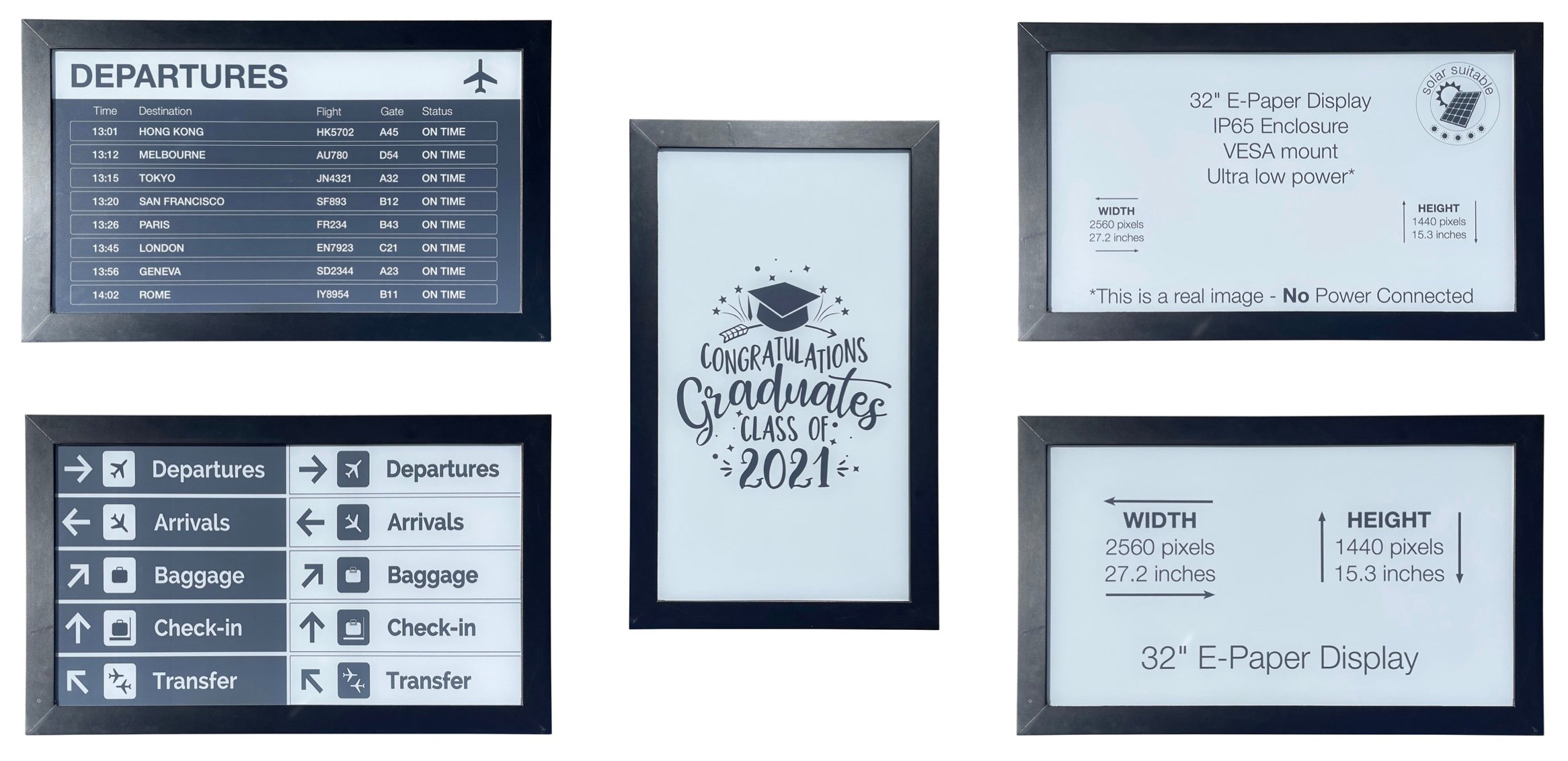
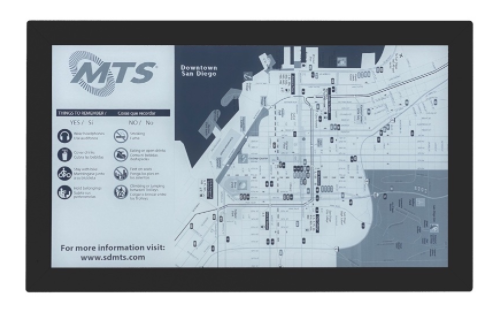
An e-paper display is a device that mimics the appearance of ink on paper. It is also known as electronic paper or electronic ink, which is commonly shortened to e-ink. E-paper technologies are capable of displaying static text and images, without the need for electricity in most cases.
Compared to light-emitting displays, such as LED and LCD, e-paper displays instead reflect light, similar to paper, making it more more comfortable to read. E-paper displays also provide a wider viewing angle than the other displays, and can also be read in direct sunlight without the image fading away.

Since e-paper display signs are used for displaying static images or text without the need for the disruptive glowing lights that LED and LCD displays emit, these displays are ideal for public signage. E-paper displays eliminate the need for paper, which often gets discarded and littered outdoors.
E-paper displays are commonly found in applications such as public outdoor signage at parks for information and events, public transportation signage used inside of airports, bus stations, and train stations for schedules, and, in some cases, indoors at restaurants and cafes for menu boards.
Perhaps the best known application of e-paper display technology in consumer products are e-readers, such as the Amazon Kindle. E-paper technologies can also be commonly found in other consumer products such as smartphones, wristwatches, computer monitors and laptops.
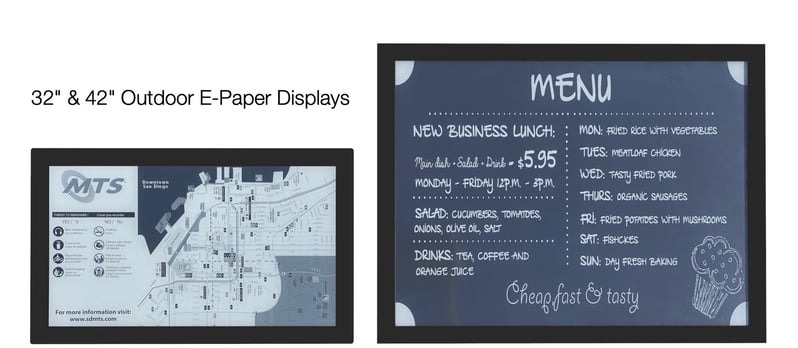
The standard e-paper display signage sizes that Edge offers are the Digital View 32-inch and 42-inch displays. Additional sizes are available.
Custom sized e-paper signage including tiled e-paper video wall signage are also available to fit the needs of your unique application.
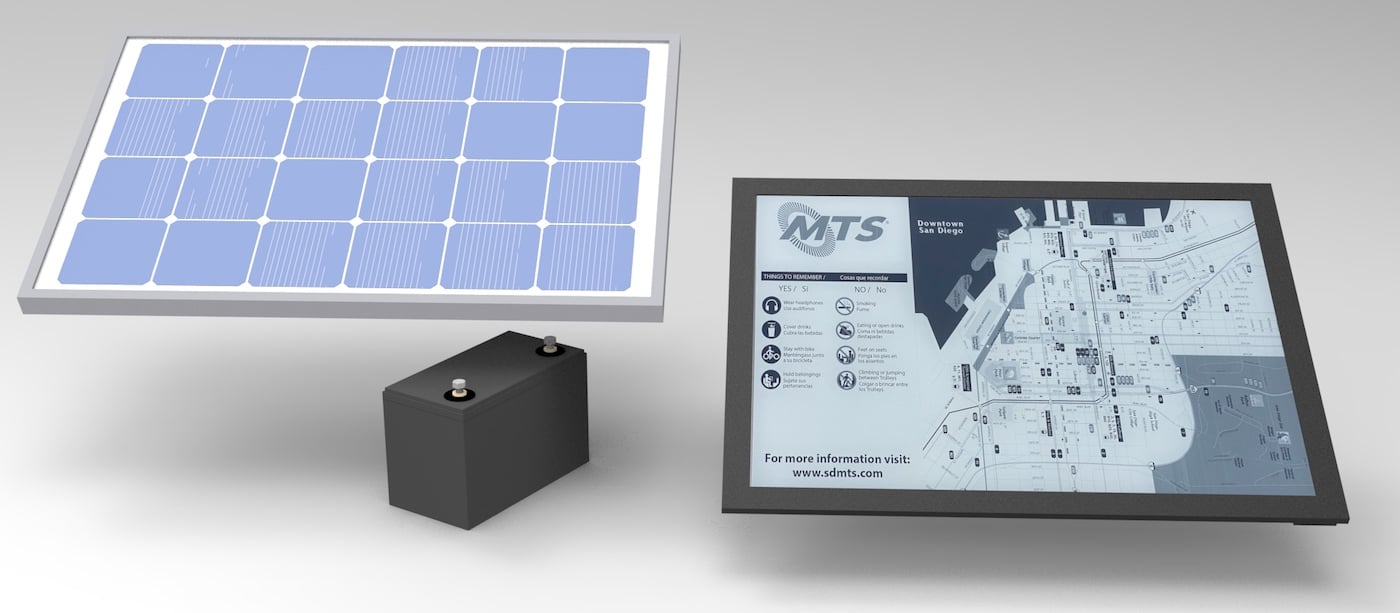
Since e-paper displays do not require any power to hold a static image, very little power is required at all. The main power comes from other devices, such as the media player.
The various power alternatives include:
When in an idle state, these displays draw no power, although the image will remain on the display.
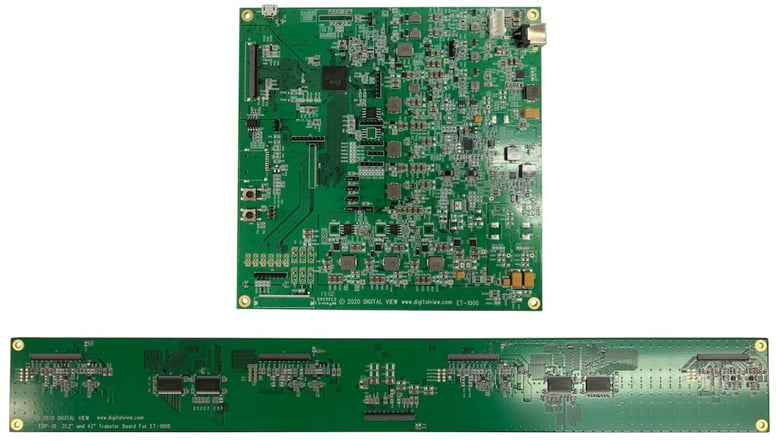
The Digital View EPM-100 interface board set is specifically designed for the 32-inch and 42-inch bi-stable E-Ink, e-paper reflective outdoor display panels. The low-power interface accepts an image transferred over USB from a media source or player, such as Raspberry Pi or Android PC.
Custom driver board layout with additional functions or integration is available as an engineering service. Contact us below for more information.
USB input interface board set for 32-inch and 42-inch e-ink/e-paper reflective panels: